ART
Installations and spatial works in which sound becomes physical: transmitted through bodies, objects, architecture and space.
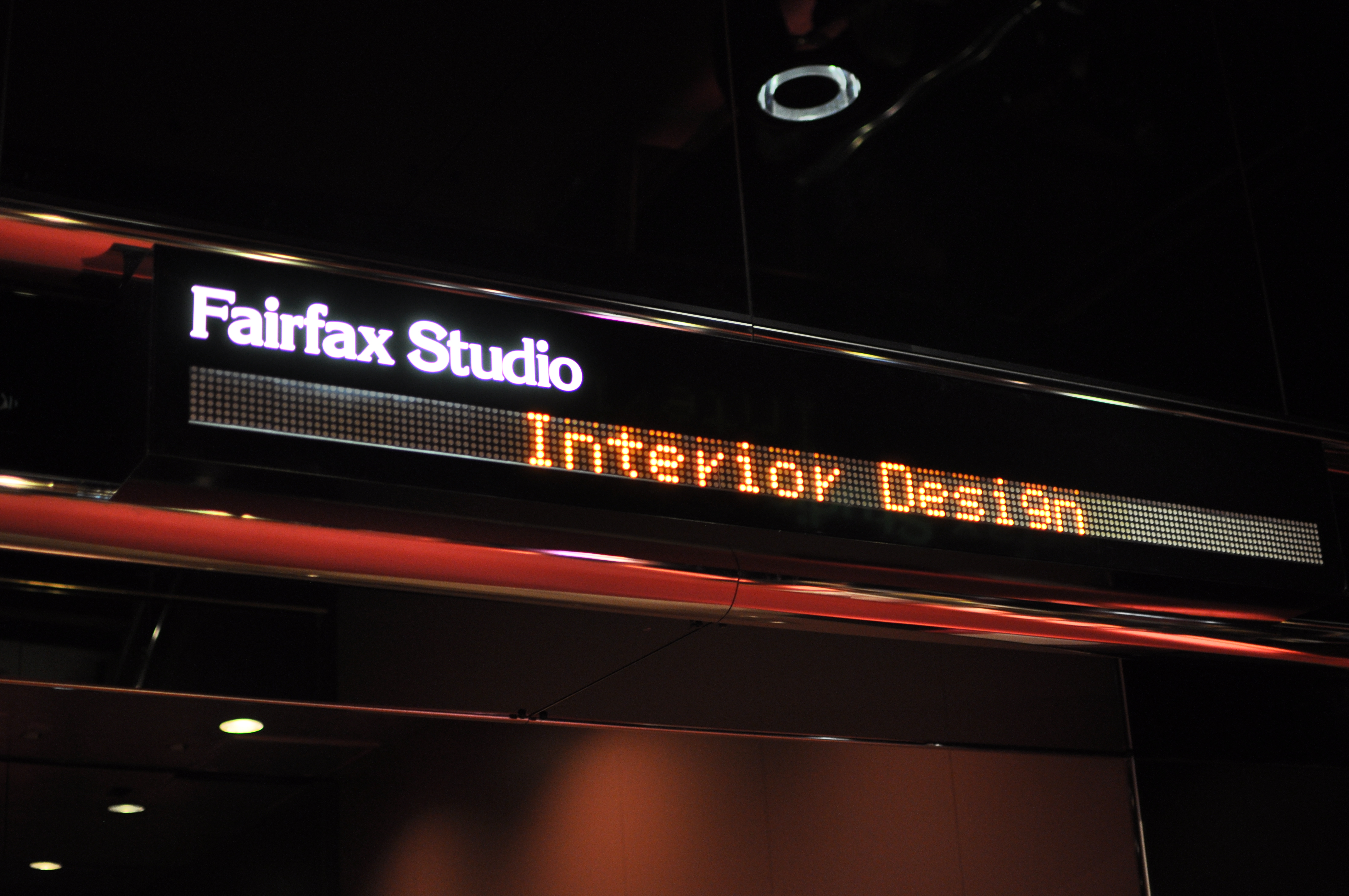
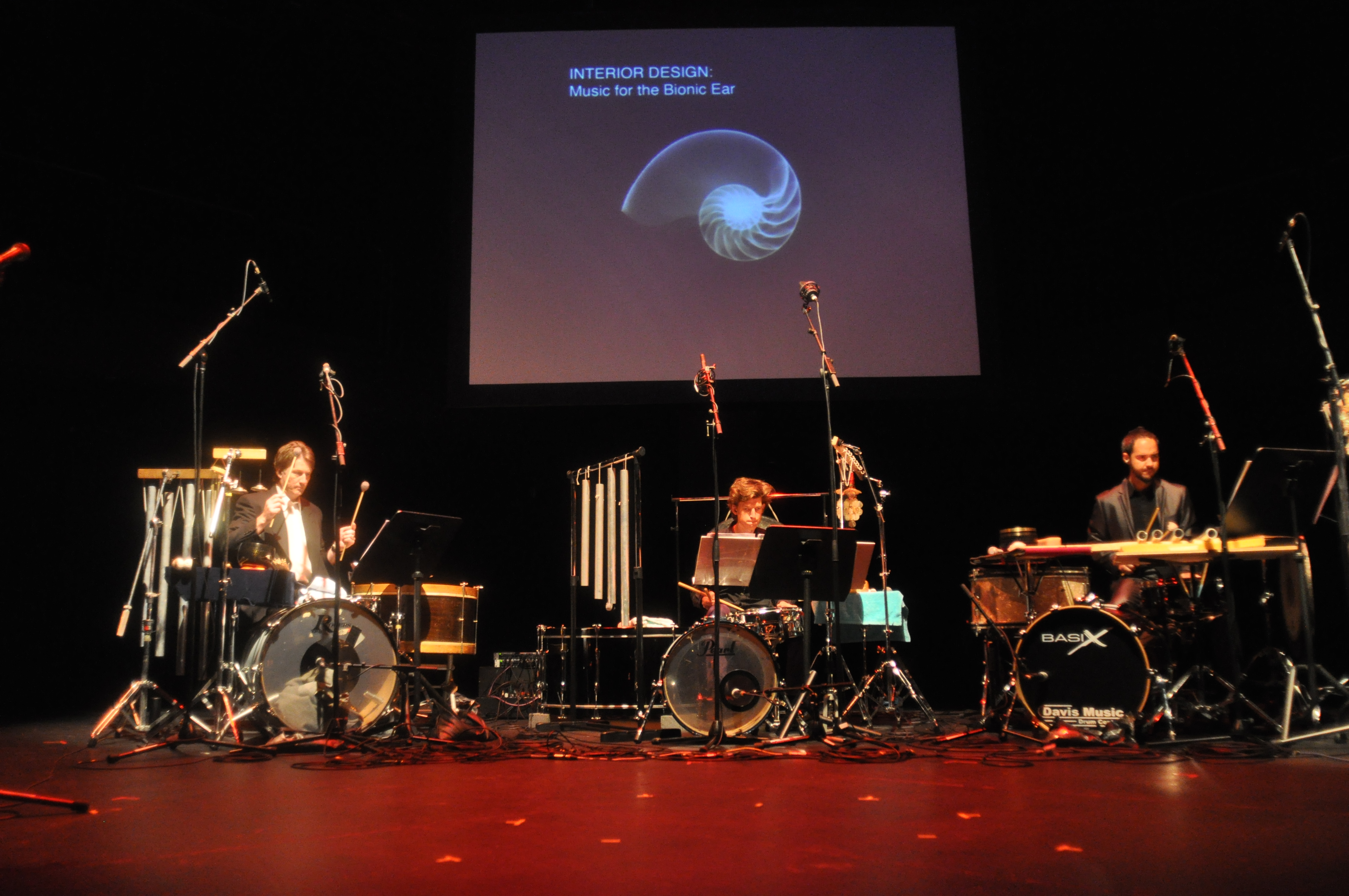
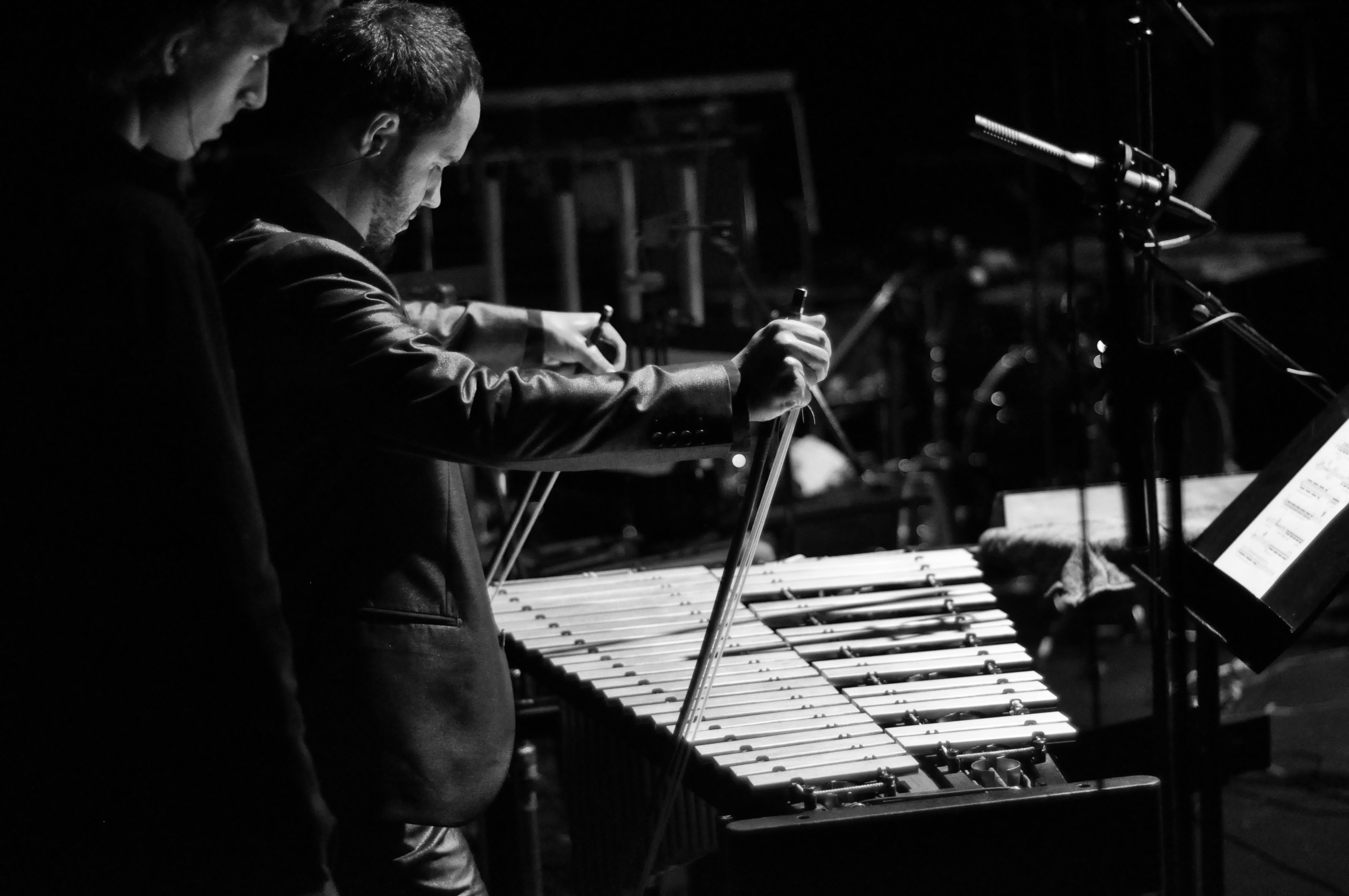
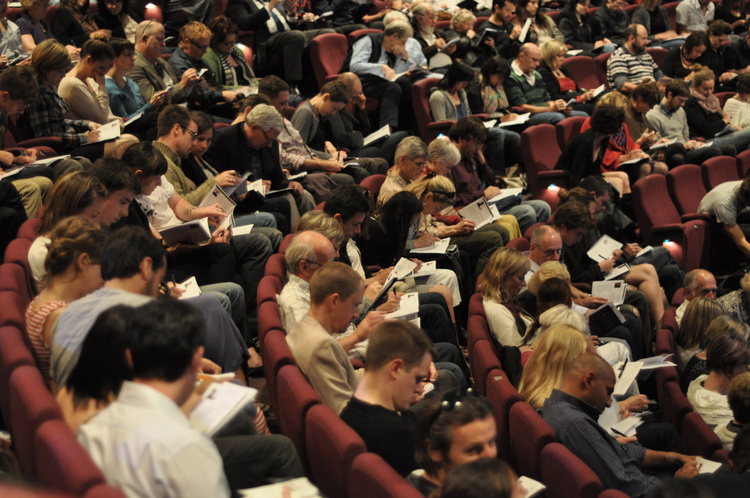
In 2012, a concert was held in Melbourne featuring six 10-minute pieces composed by Australian new-music composers Robin Fox, Rohan Drape, Ben Harper, Natasha Anderson, James Rushford, and Eugene Ughetti. The concert took place at the Fairfax Studio at the Arts Centre Melbourne and included a combination of live instruments played on stage and pre-recorded instrumental, vocal, or synthesized audio.
The compositions were specifically tailored to the limitations of cochlear implant sound processors to provide a pleasant and enjoyable musical experience for cochlear implant users, allowing them to share the experience with their normal-hearing peers. To develop their pieces, the composers consulted with scientists and the Bionics Institute in Melbourne and collaborated with four adult cochlear implant recipients to test their ideas. Some composers used multimedia approaches, such as accessing software that could reproduce and sonify the output of a cochlear implant sound processor.
This concert highlighted a novel approach to addressing the limitations of cochlear implants in conveying complex musical signals, diverging from traditional efforts to optimize the sound processor itself.
Sample of each piece can be heard here.
Photos © Anne-Sophie Poirier
Scientific Publications
- New music for the Bionic Ear: An assessment of the enjoyment of six new works composed for cochlear implant recipients (2012) H Innes-Brown, A Au, C Stevens, E Schubert, J Marozeau. 12th International Conference on Music Perception and Cognition (ICMPC) 8th. [pdf]
- Music for the cochlear implant: audience response to six commissioned compositions (2012) A Au, J Marozeau, H Innes-Brown. Seminars in Hearing 33 (04), 335-345. [pdf]
- ‘Like Pots and Pans Falling Down the Stairs’. Experience of Music Composed for Listeners with Cochlear Implants in a Live Concert Setting (2014) E Schubert, J Marozeau, CJ Stevens, H Innes-Brown. Journal of New Music Research 43 (2), 237-249. [pdf]
- Cochlear Implants Can Talk But Cannot Sing in Tune. (2014) J Marozeau, N Simon, H Innes-Brown. Acoustics Australia 42 (2). [pdf]
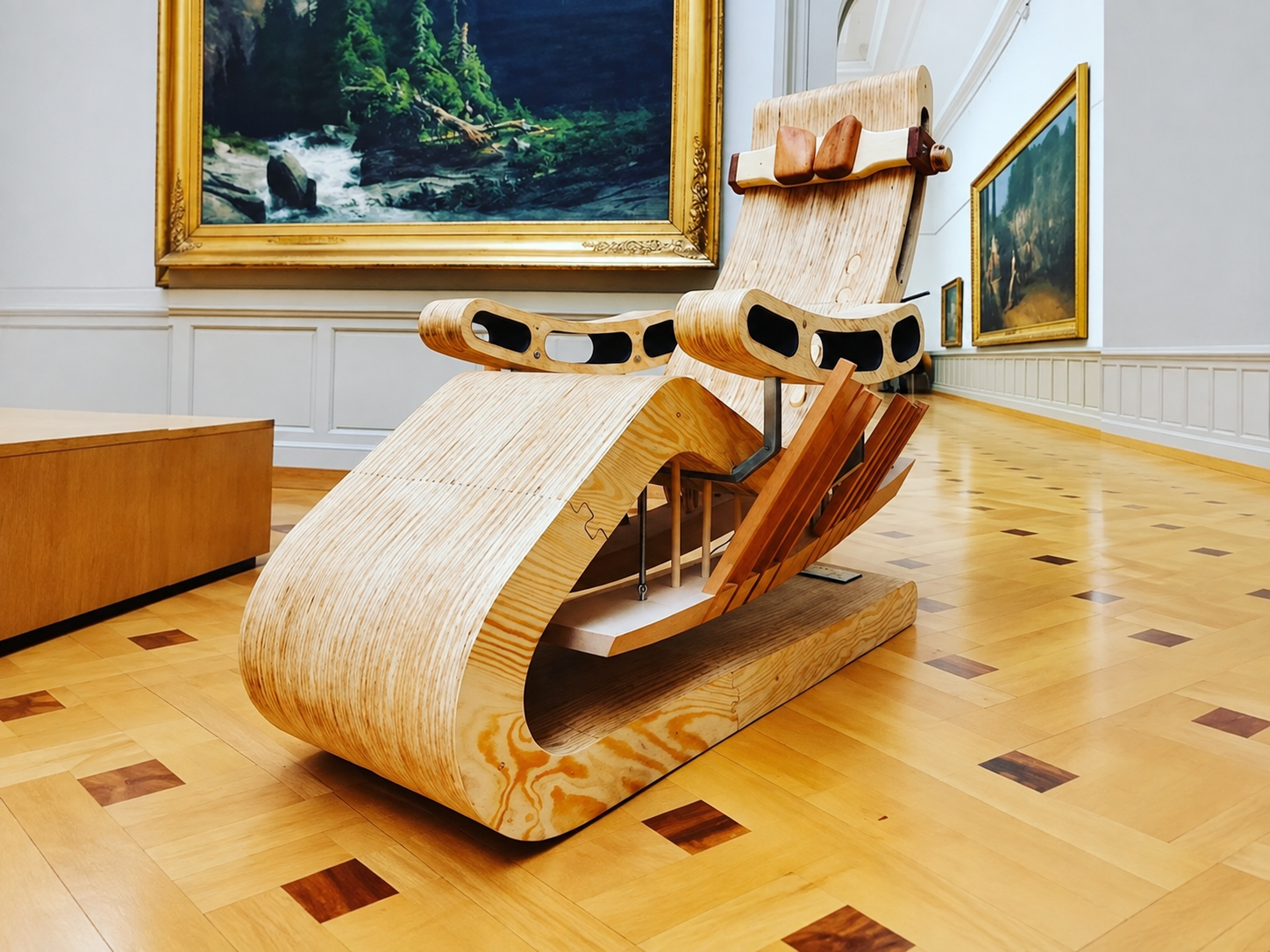
The Auditory Lounger is a listening device designed to make music audible and tactile at the same time. Each lounger combines sound reproduction with vibrotactile elements, so musical vibrations can be felt through the body as well as heard through the ears.
The three loungers were designed by students at the Technical University of Denmark: Tommer Tchelet, Brent Reissman, and Gabriele Ravissa.
The installation builds on the idea that musical vibration is not only an acoustic phenomenon. The audible range partly overlaps with the range of tactile perception, and the loungers use that overlap as a creative space: composers and listeners can explore rhythm, pitch range, resonance, and physical sensation as one connected experience.
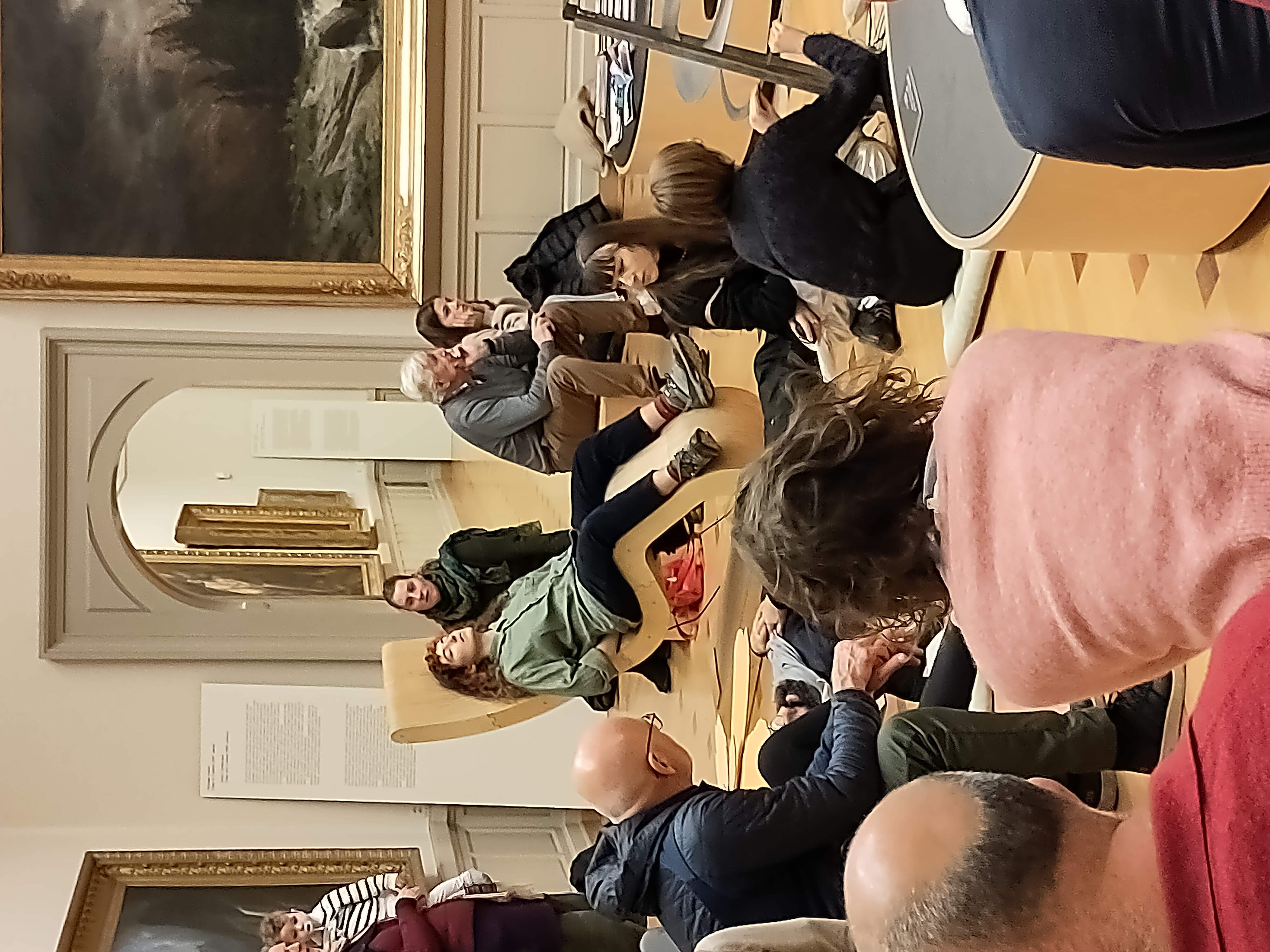
Three auditory loungers were displayed for one year at the Museum of Art and History in Geneva. During the programme Résonance Nocturne, Raphaël Ortis and Charlotte Nordin invited composers for monthly three-day residencies, each ending with a concert of music created for the loungers.
Scientific Reference
An artistic audiotactile installation for augmented music, Jeremy Marozeau, SMC 2023, Proceedings of the Sound and Music Computing Conference 2023, pp. 419-425.
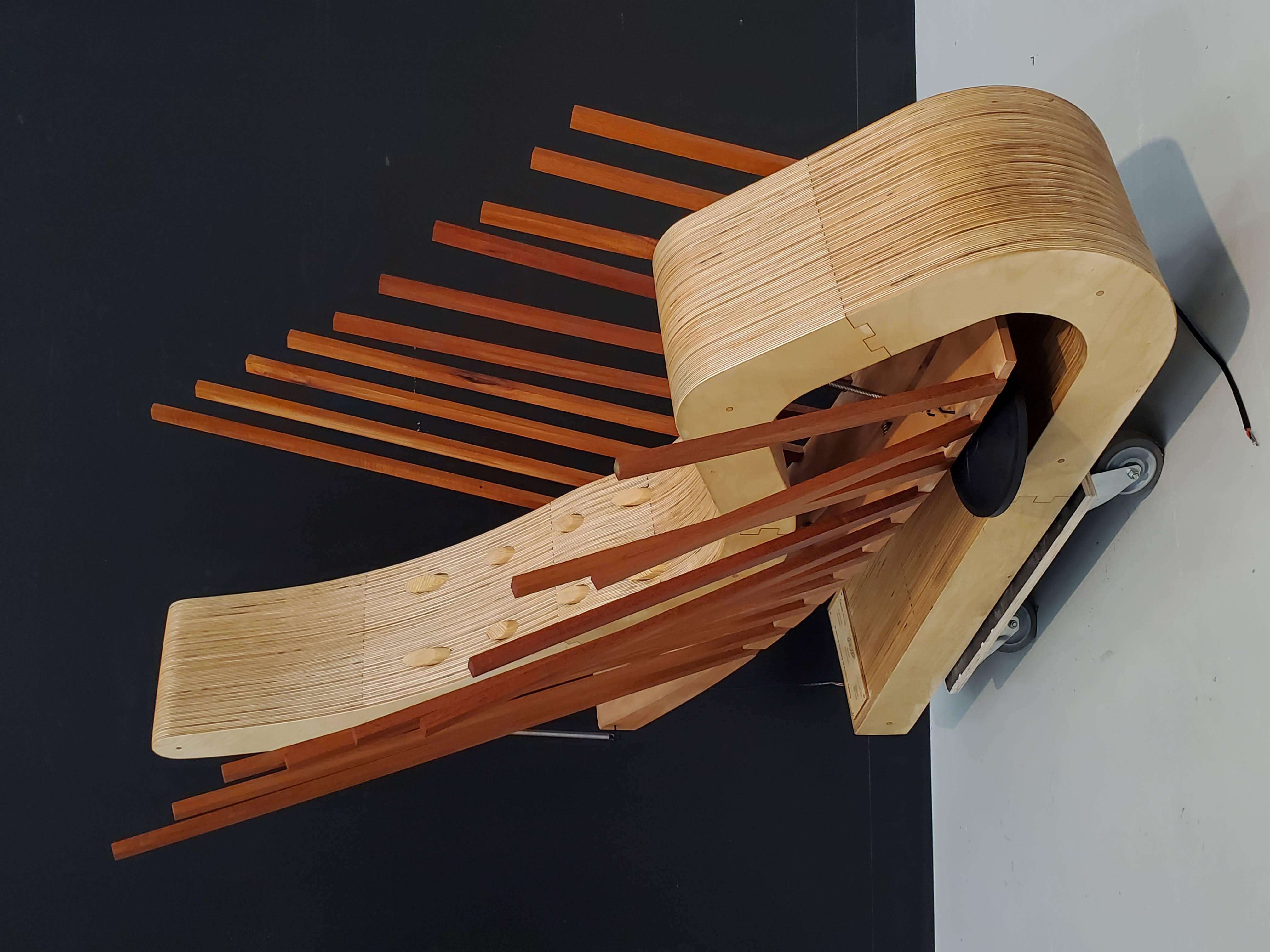
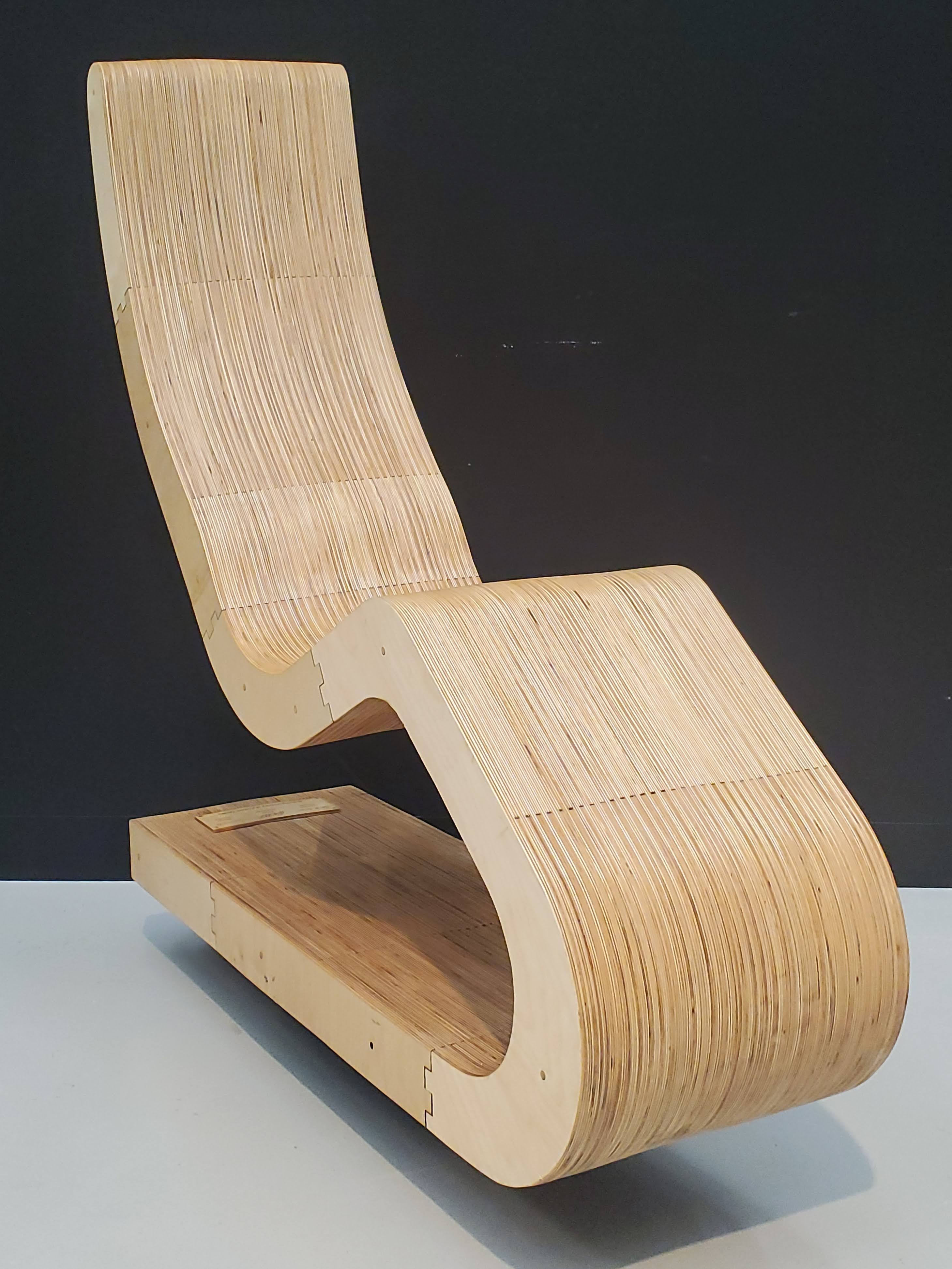
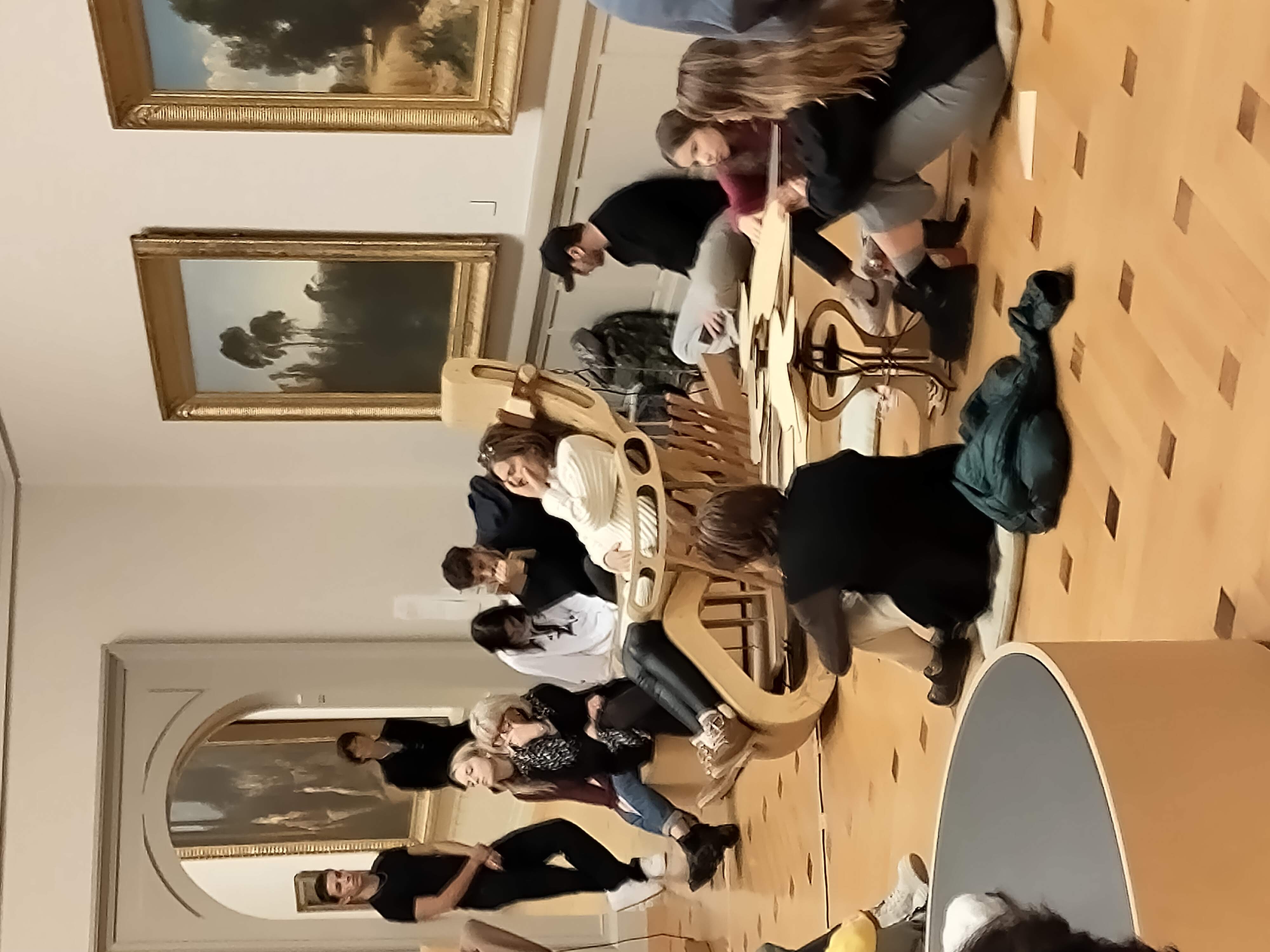
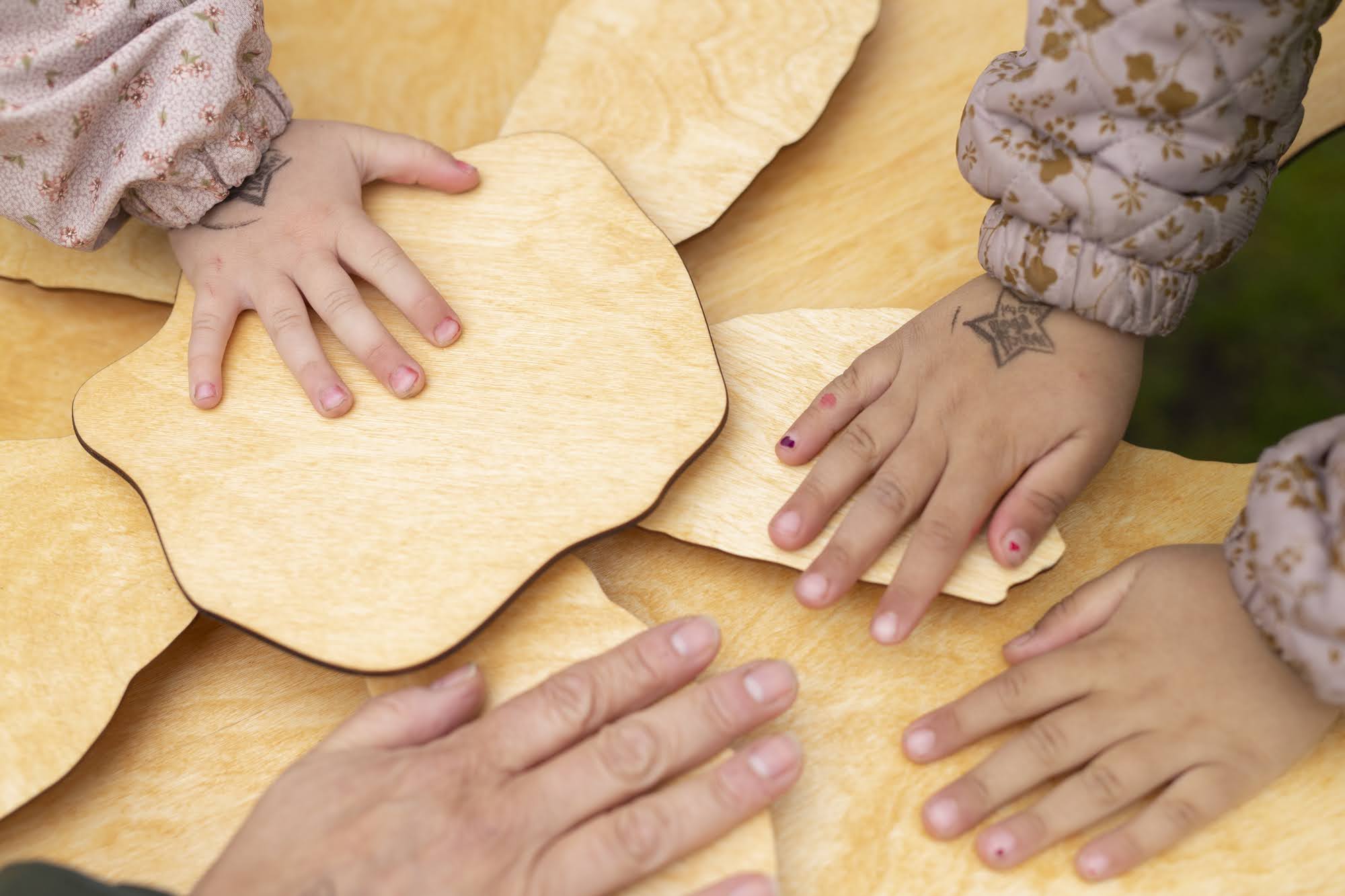
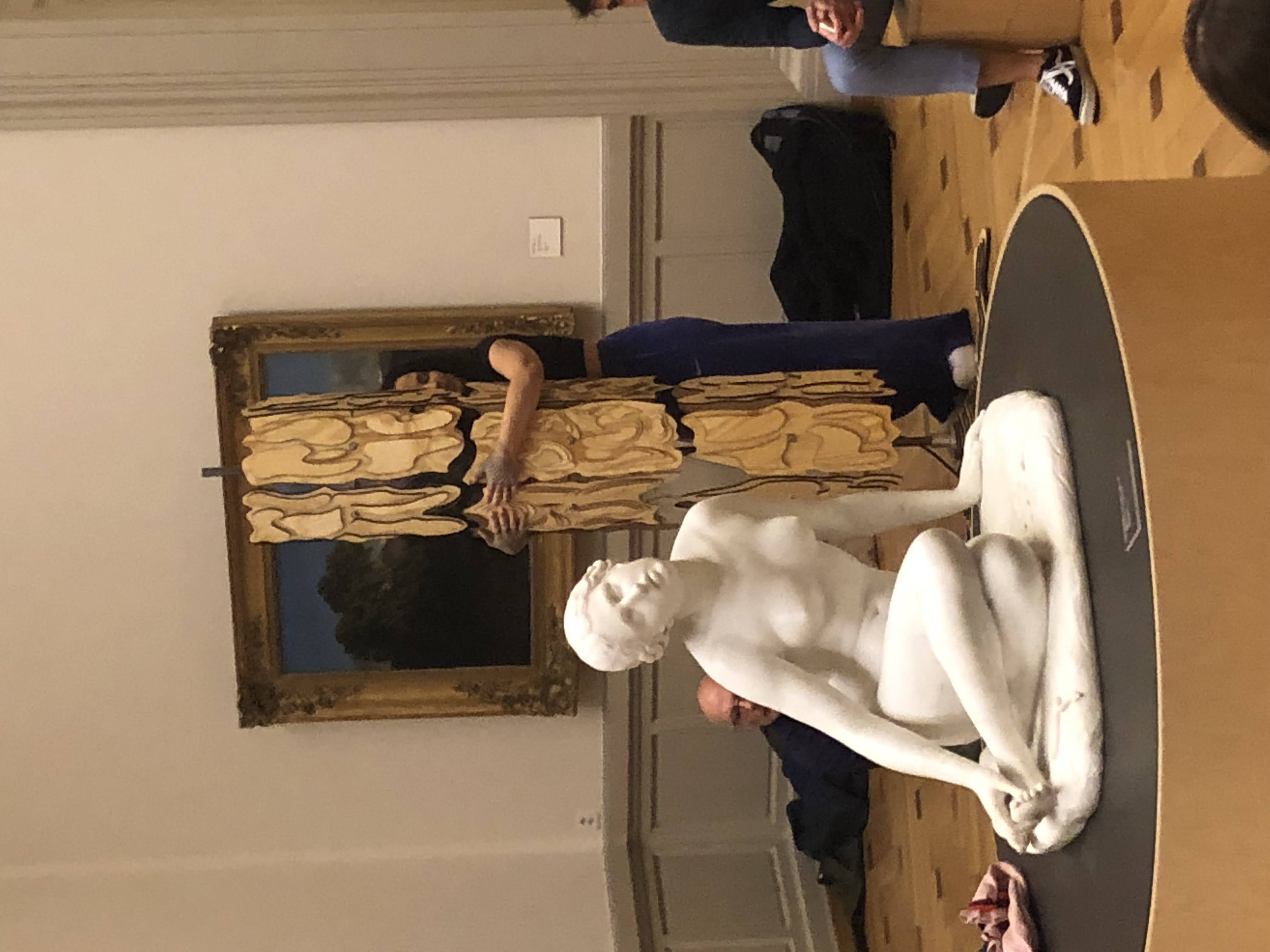
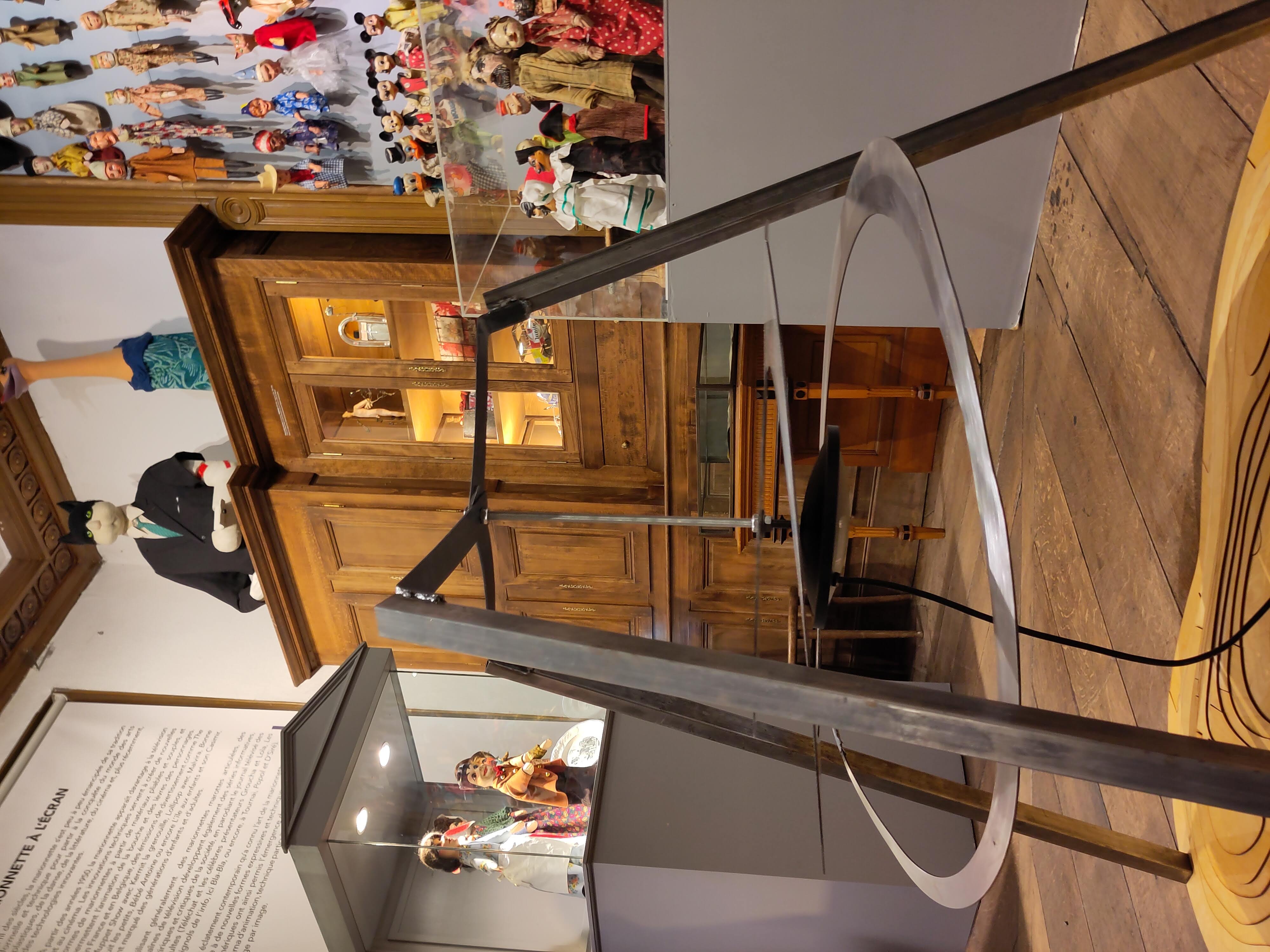
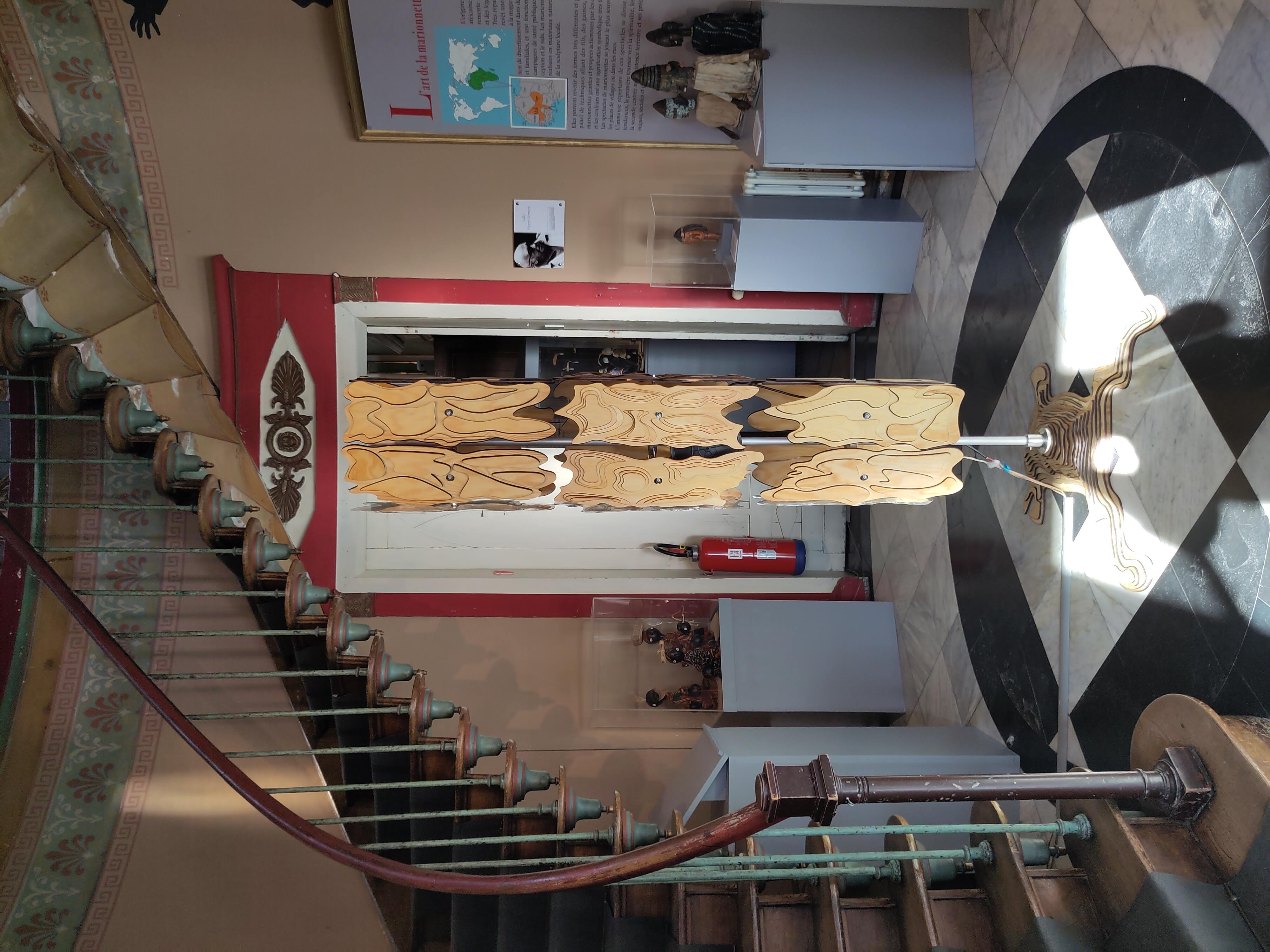
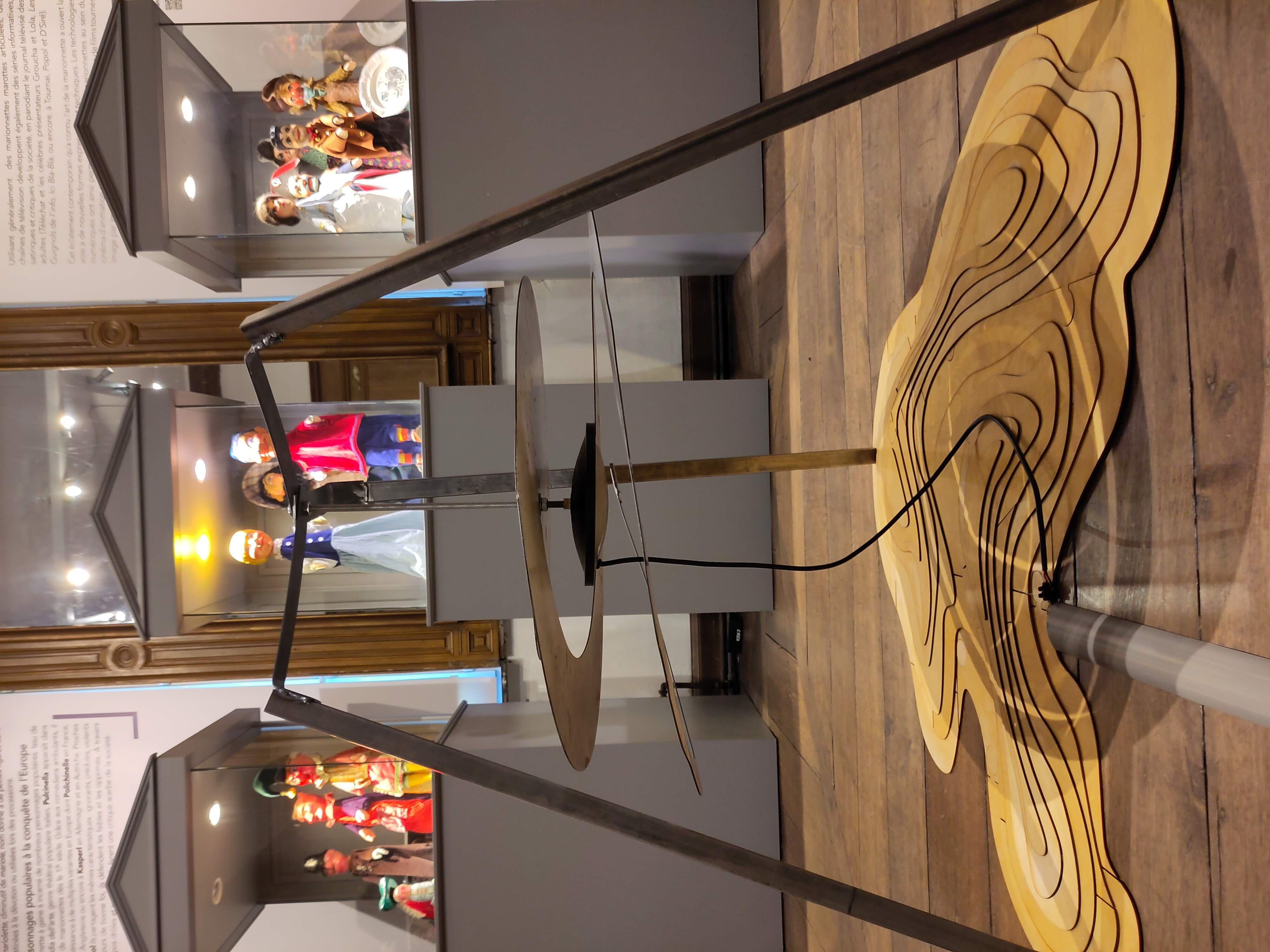
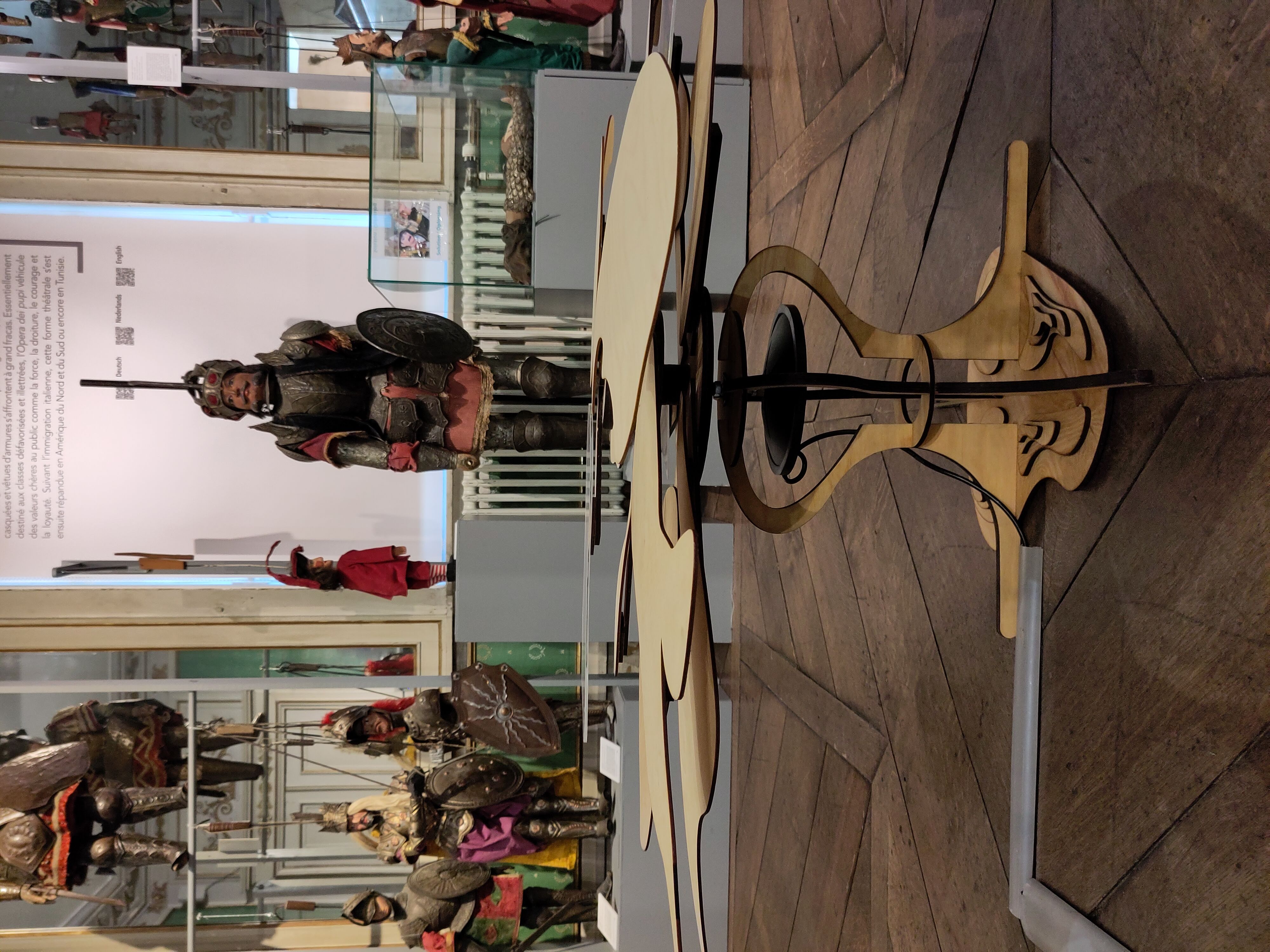
Vibrating Forest is an audio-tactile installation created in collaboration with Belgian artist Kiral. The work invites visitors to enter a small forest of resonating forms, where sound is transmitted through sculptural objects and felt directly through touch.
The installation was developed as part of Augmented Music’s exploration of listening through the body. Rather than treating vibration as an effect added to sound, the project uses tactile resonance as a compositional material in its own right.
Vibrating Forest has been shown in several contexts, including Distortion Festival, Copenhagen Contemporary, the Museum of Art and History in Geneva, and the Musée des Arts de la Marionnette in Tournai.
More about Kiral’s collaboration with Augmented Music can be found on Kiral World.
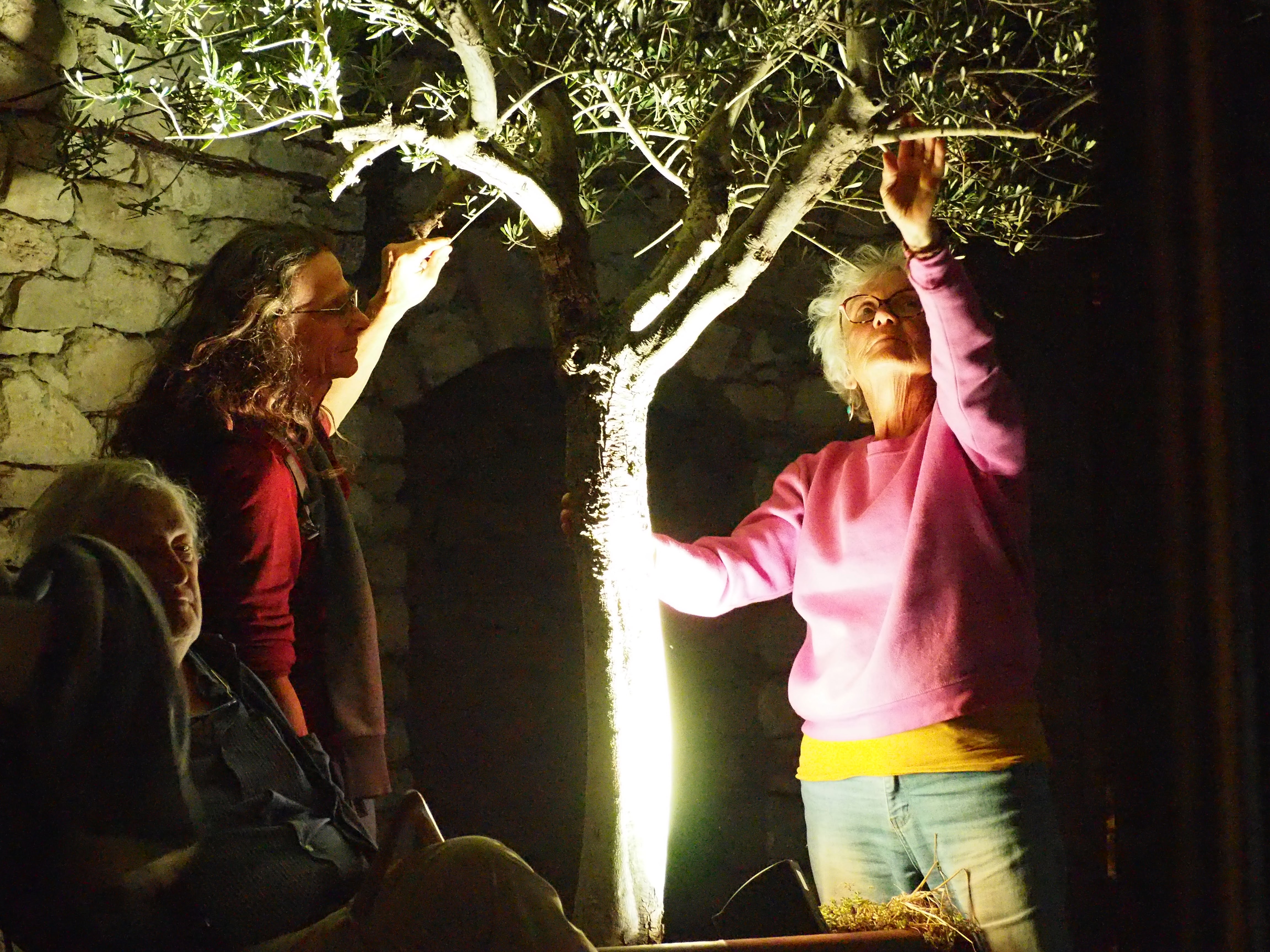
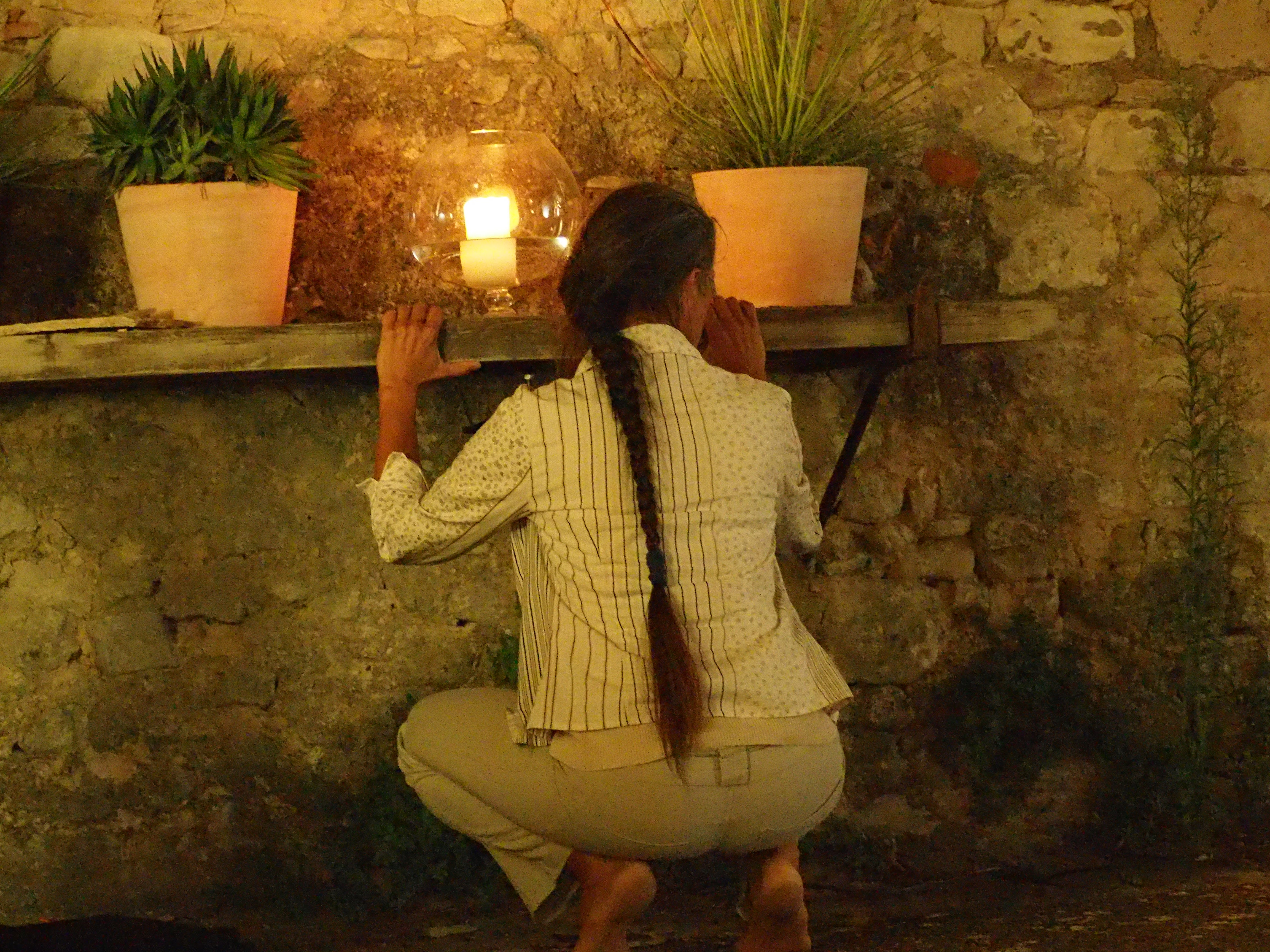
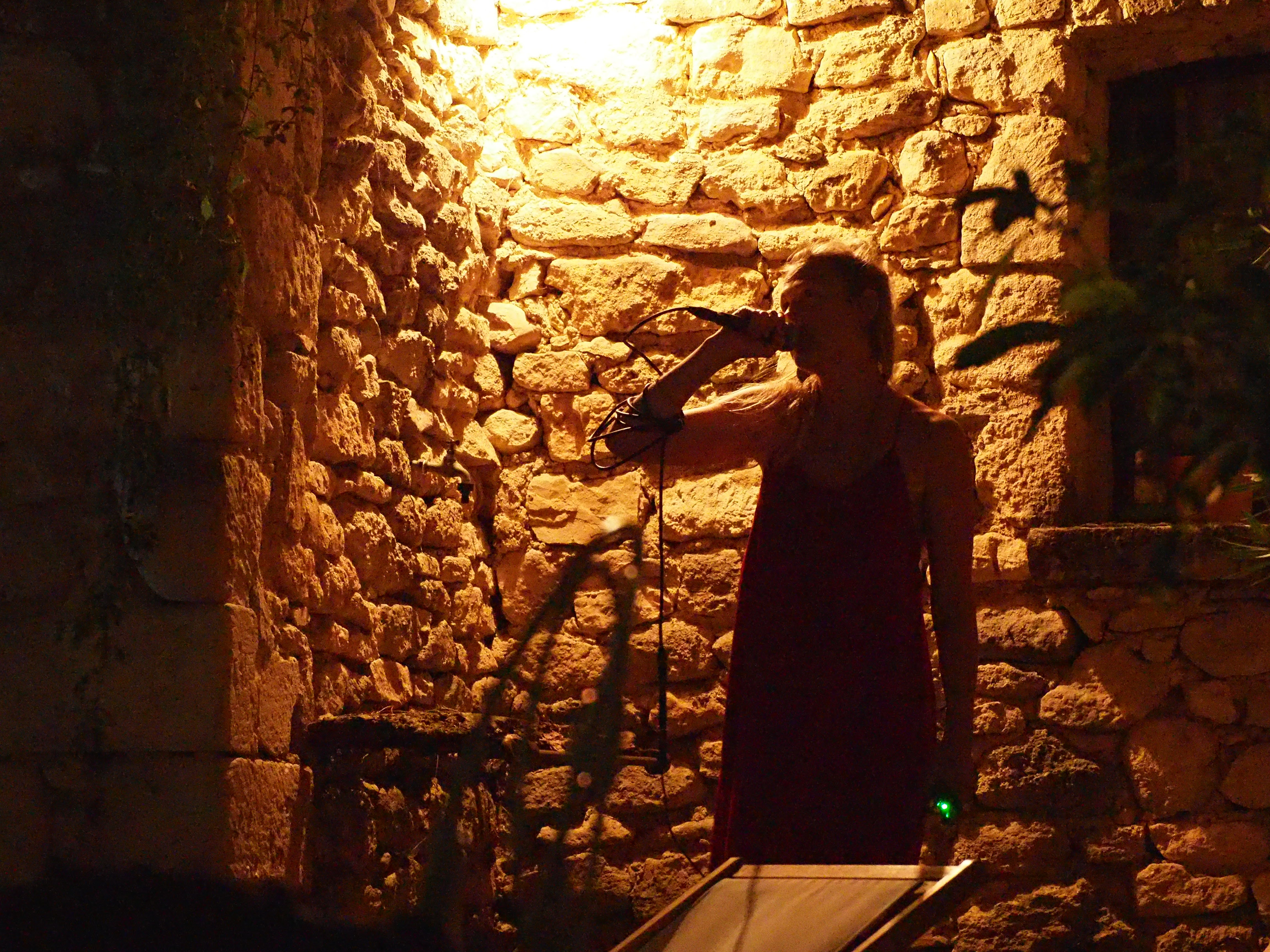
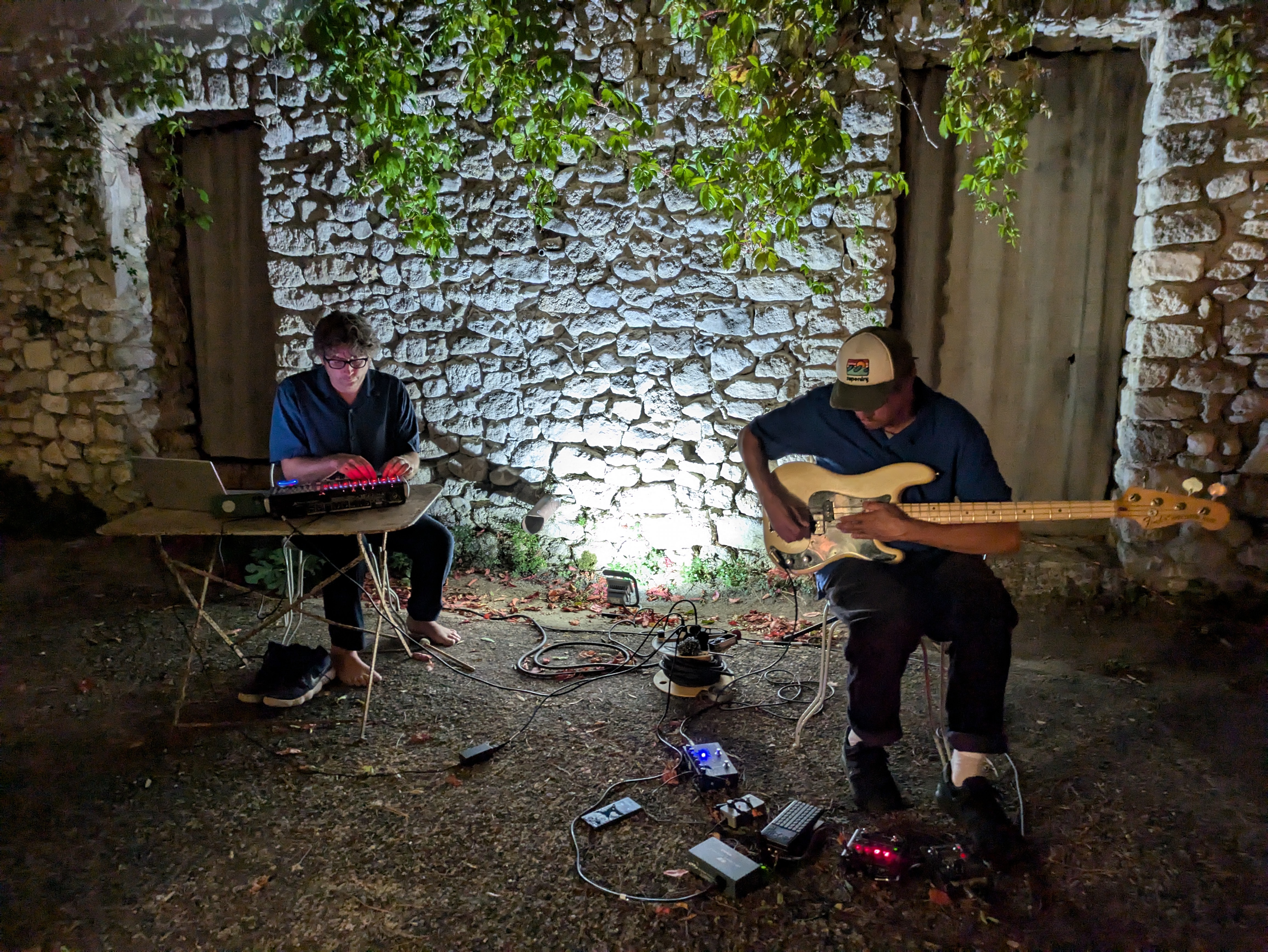
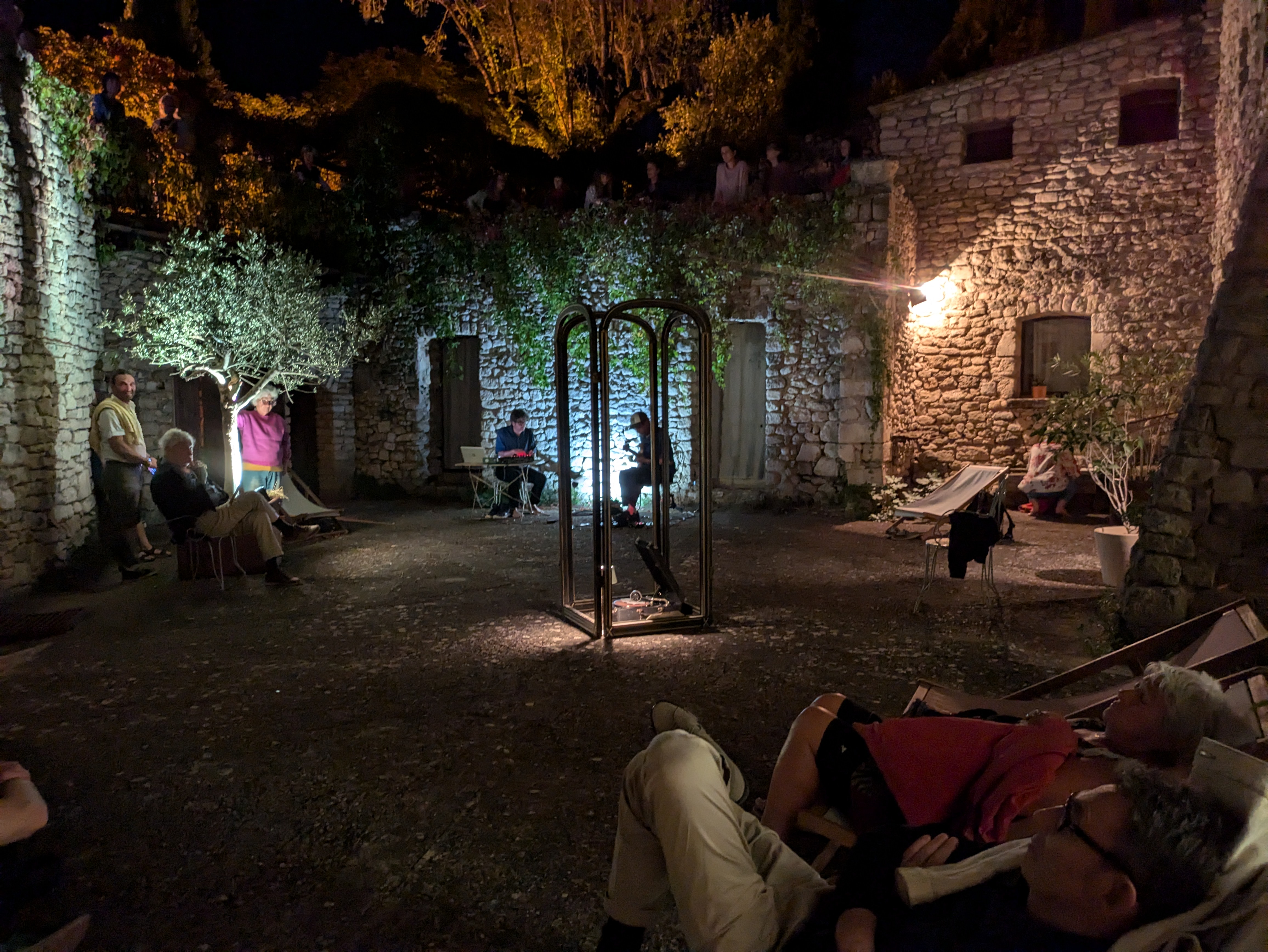
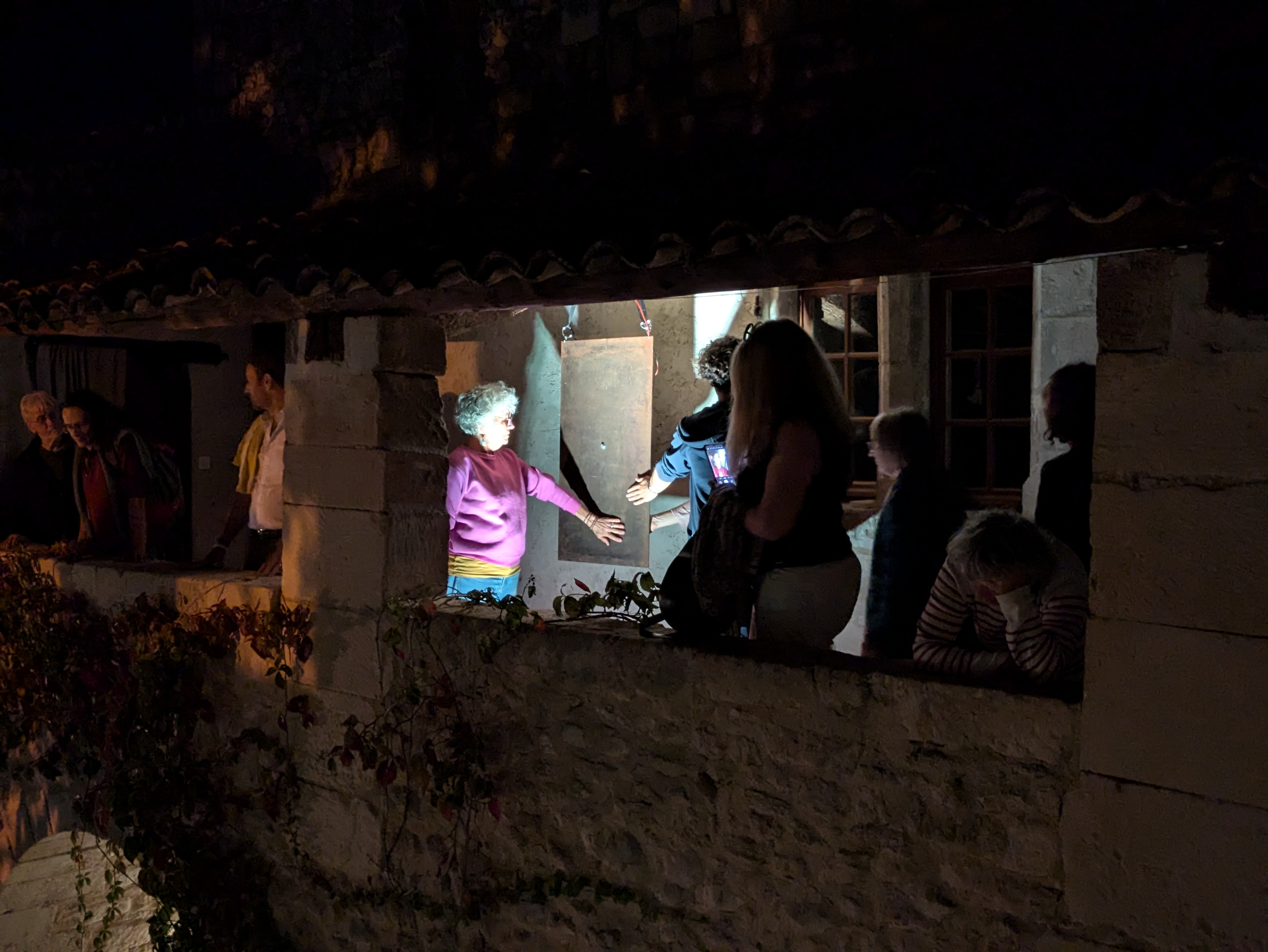
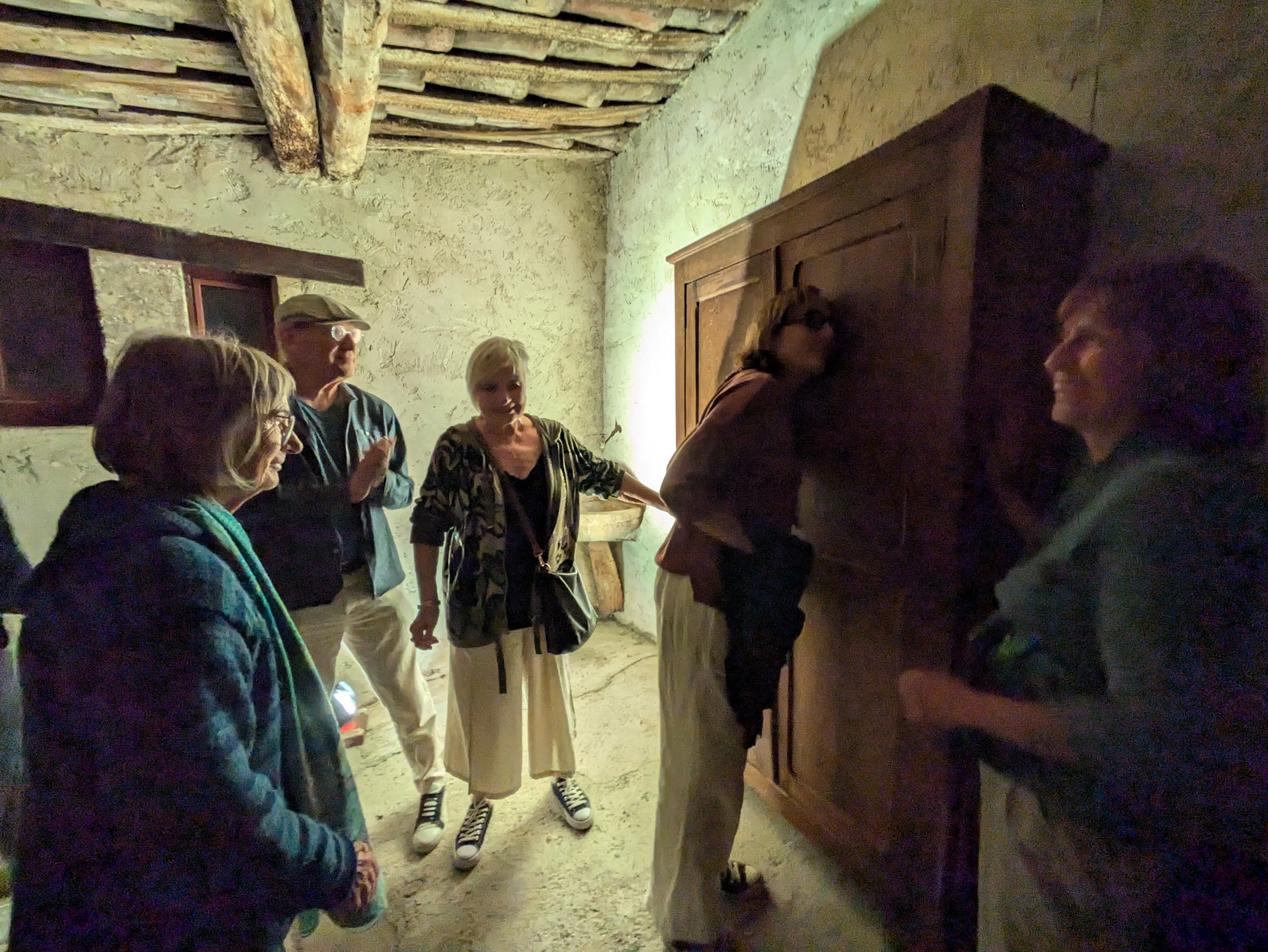
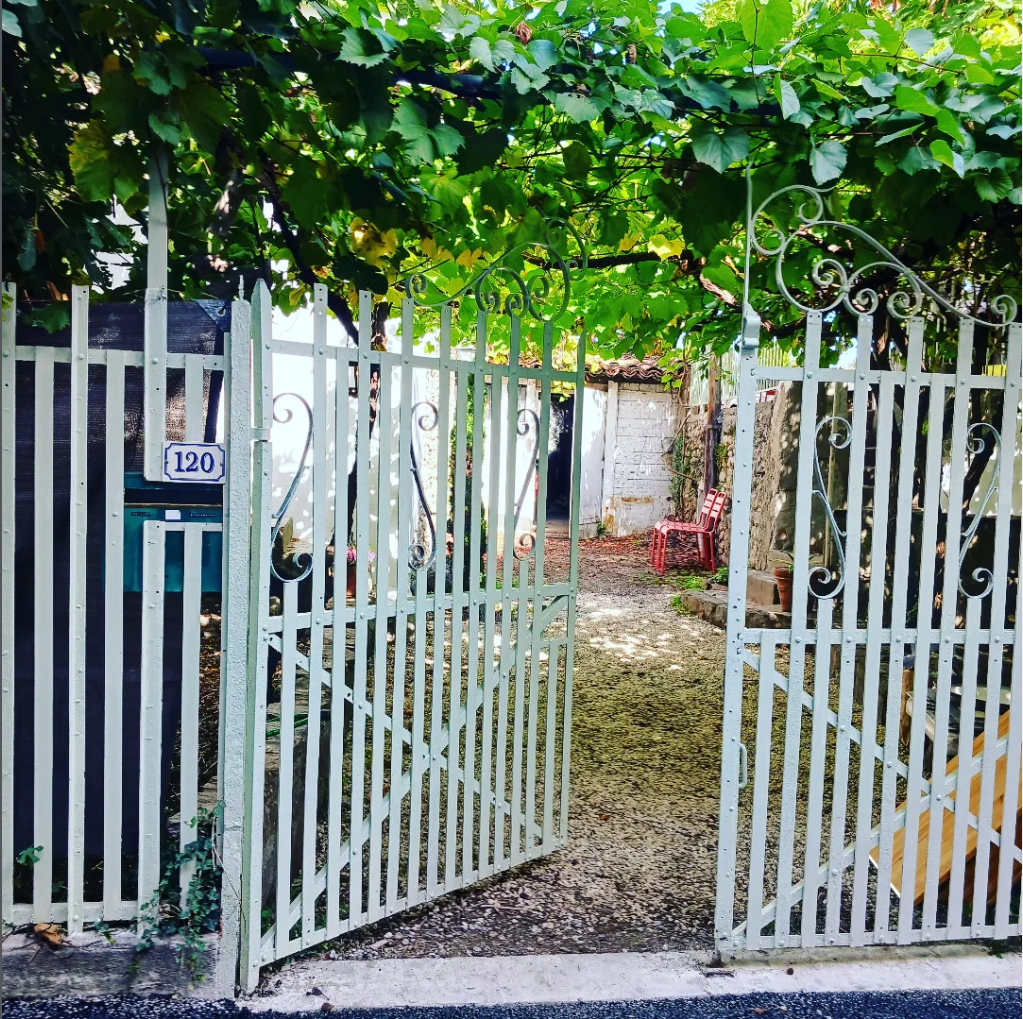
Raphaël Ortis, Charlotte Nordin, and Jeremy Marozeau recently presented a project aimed at co-composing the sound of a space in harmony with that very space. Every space and object has its own resonant frequencies, whether it’s a musical instrument, a speaker, a room, a courtyard, a wall, a table, or a tree.
In this project, the courtyard of the Château de Céreste and various objects placed within it, such as an old workbench, an olive tree, a door, stones, and chairs, were used as resonant material. These objects were equipped with powerful transducers to make them resonate, allowing their internal music to be expressed.
As a result, the audience was able to commune with the space not only through sound but also tactilely, as the vibrating objects engaged all the senses: auditory, tactile, and visual.
Photos © Sophie Marozeau
Media
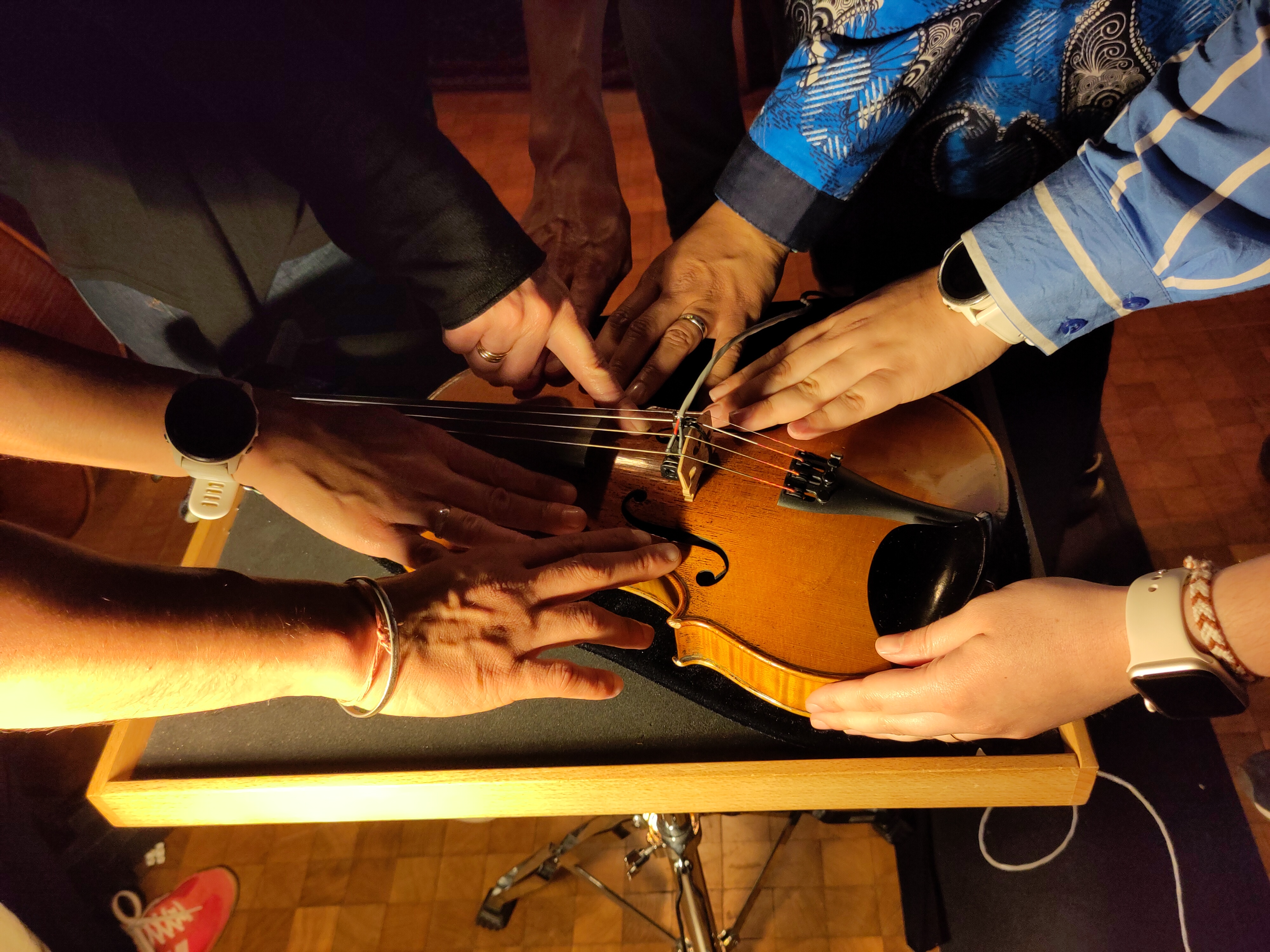
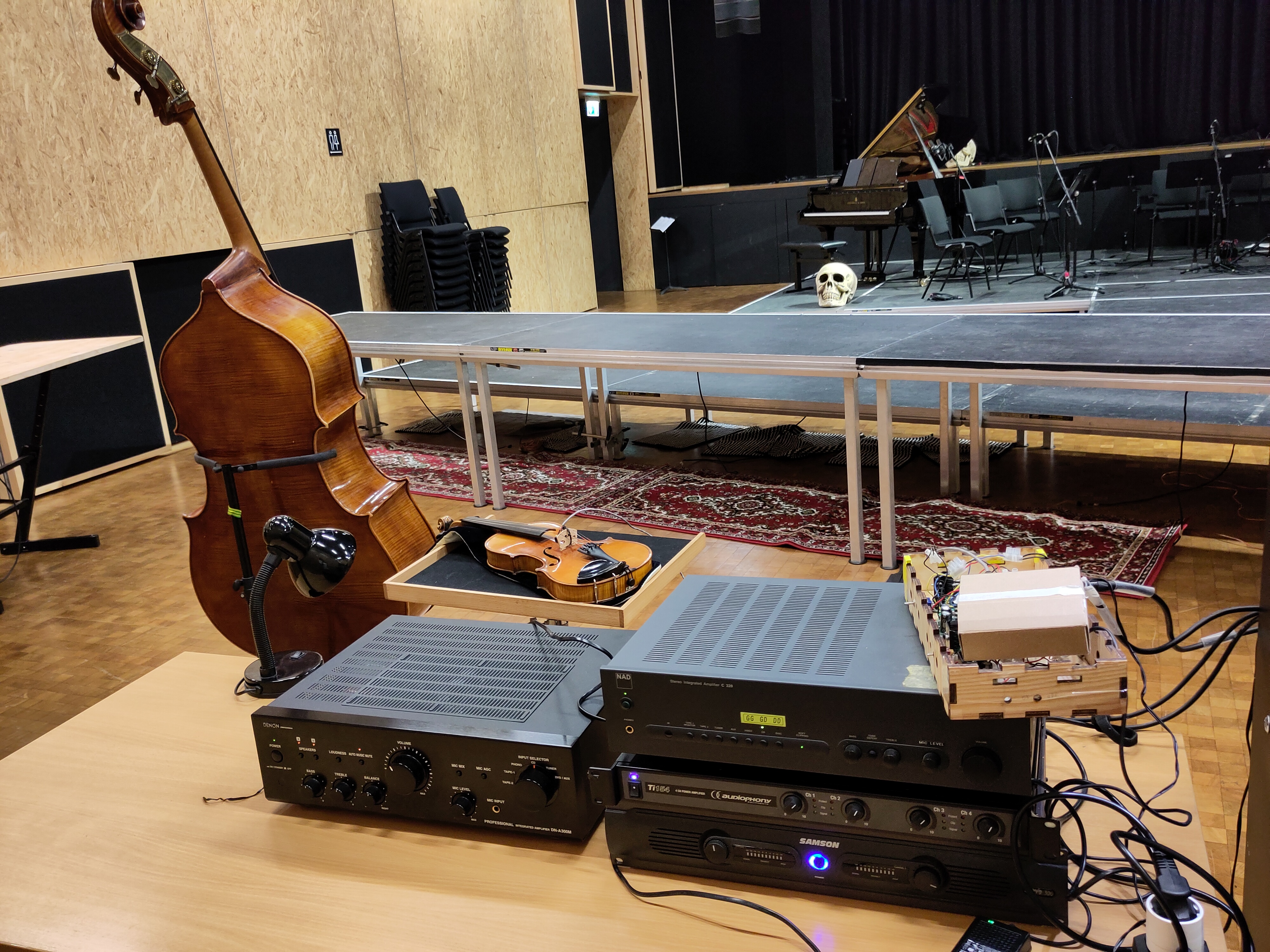
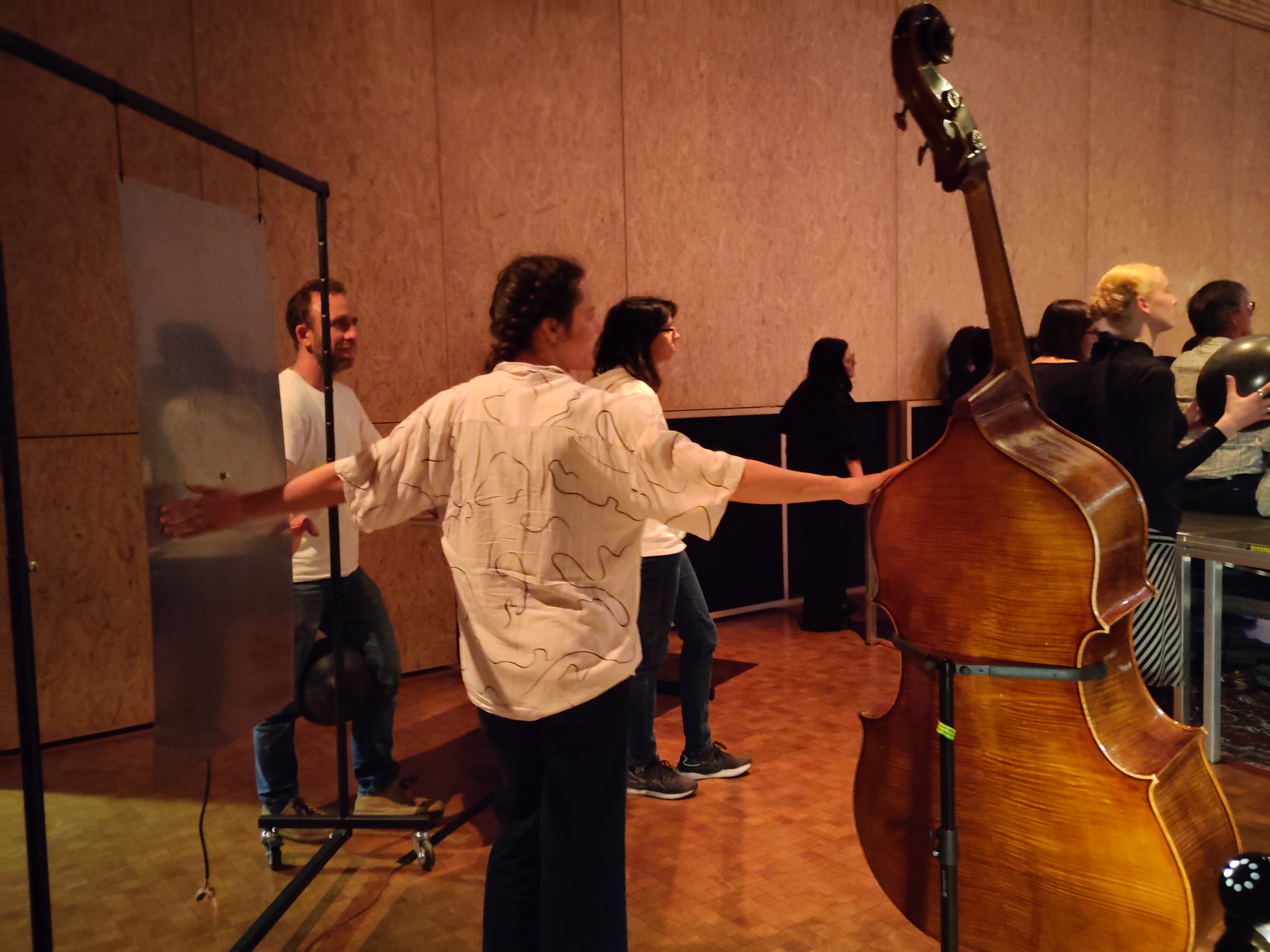
In May 2025, the Haute École de Musique de Lausanne (HEMU) presented an inclusive performance of Camille Saint-Saëns’ Danse Macabre as part of SensiMUS 2, a participatory research project developed with the Sinfonietta de Lausanne and the University of Geneva. The concert was designed with and for deaf and hard-of-hearing audience members, combining orchestral music with vibration, light, musical mediation, and French Sign Language performance.
My contribution focused on the vibrotactile part of the experience. Shakers installed beneath the audience platform transmitted musical vibrations through the body. We also built tactile devices linked to a violin, a double bass, and resonating metal and wooden plates, allowing audience members to physically experience vibrations produced by the instruments themselves.
The aim was not to replace sound, but to open another way of experiencing the same musical event through hearing, sight, and touch.
Vibrotactile design and implementation: Jeremy Marozeau / Augmented Music
Collaboration: HEMU · Sinfonietta de Lausanne · University of Geneva
Project & Media
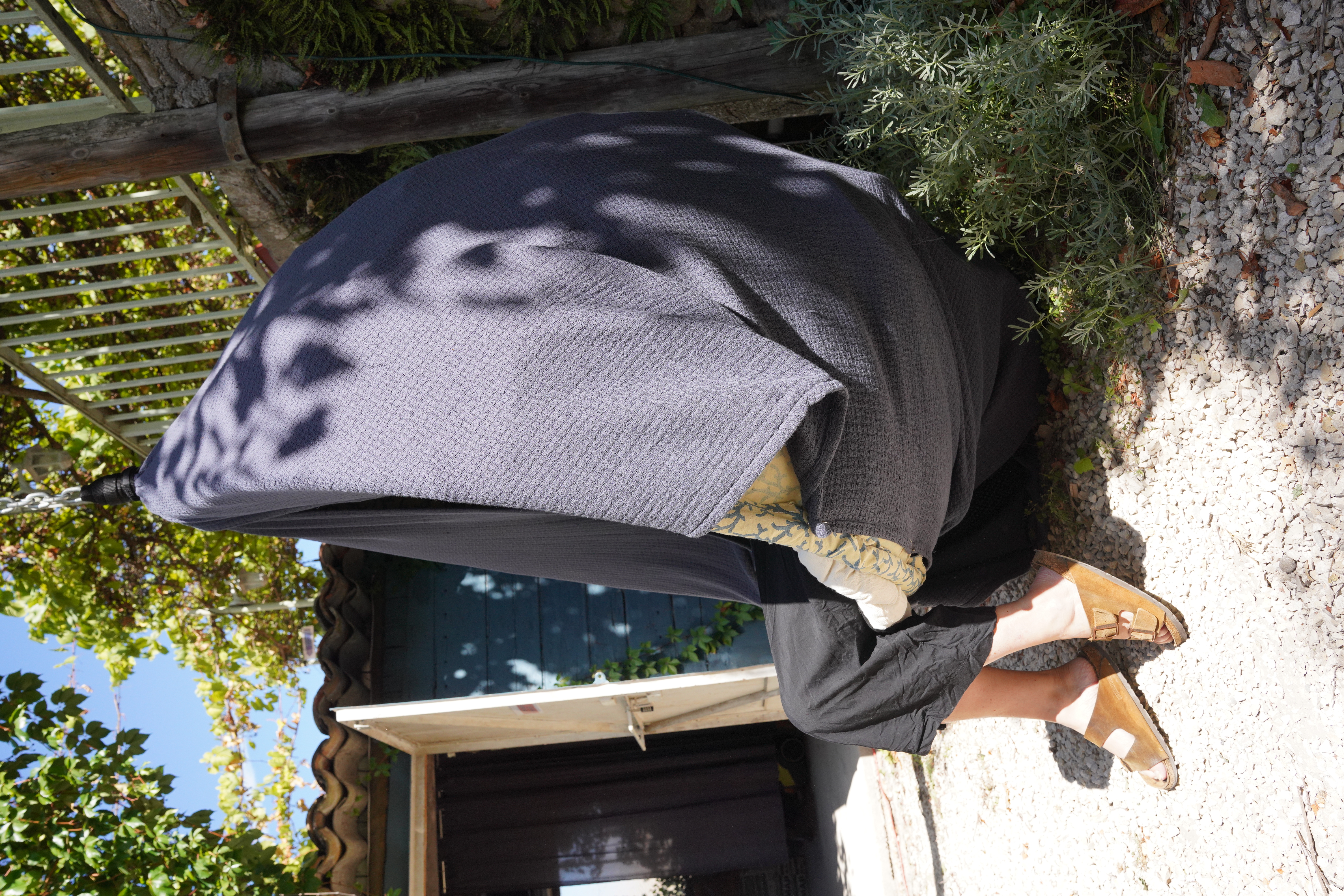
Poetic glimpses drawn from seven years of dreams, written down upon waking. Fragments that gradually come together to form a single dream.
Created in collaboration by Sophie and Jeremy Marozeau, Un rêve suspendu weaves words and sounds into a dreamscape. Sophie’s poems, inspired by their dreams, take on a new form in Jeremy’s music, composed using samples from Plante Interdite.
Sound unfolds inside a suspended, egg-shaped lounger: a cocoon in which to surrender to listening. The spatial sound surrounds the body, allowing fragments of dreams to drift around the listener.
Texts: Sophie Marozeau
Music and spatialization: Jeremy Marozeau
Samples: Plante Interdite, live at the Cropettes. Feat: Guy Schneider and Juliette Huber
The installation was exhibited as part of Opus Incertain at Maison d’Artistes in Céreste-en-Luberon.
Listen to the fragments
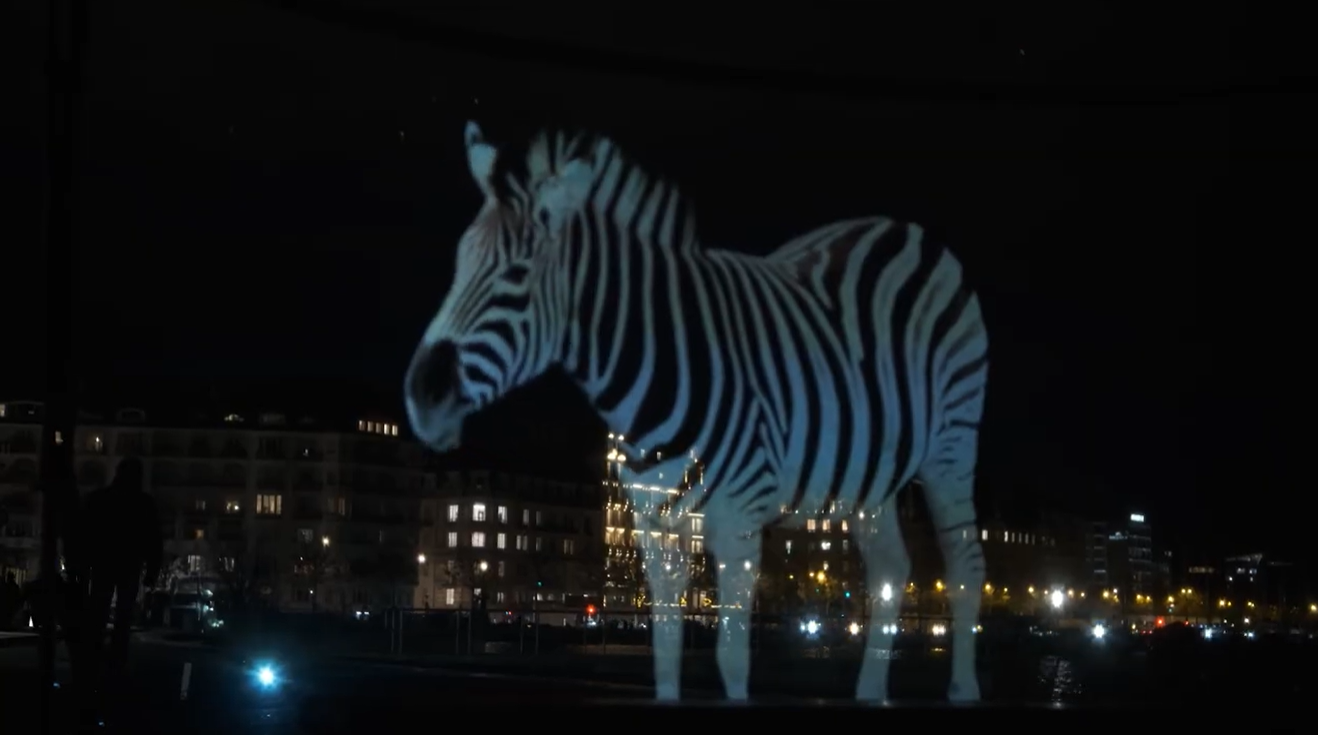
From 26 to 28 November, Geneva’s Bain des Pâquis became an unexpected landscape with Zoo virtuel au Bain des Pâquis, an installation conceived by Alexandre Zanetti in partnership with the Association des usagers du Bain des Pâquis and the Seeds association.
For three days, visitors to the baths were surprised to discover a fragment of savannah amid the lake and the site’s iconic wooden decks. Strikingly realistic holograms of wild animals appeared in the space, while sound and vibration immersed visitors in an experience of fascination and escape.
Beneath the floorboards, vibrations conveyed the power of lions’ roars and the energy of tribal music, blurring the boundaries between sight, listening and physical sensation.
Installation: Alexandre Zanetti
Soundscape and mixing: Jeremy Marozeau
Music: Plante Interdite
Video projection: JD Schneider
Texts: Nathalie Meyer-Sable
Voice: Julien Wey
Direction and editing: Jean-Pierre Huyghues Despointes (HDI production)